
Canadian winters are tough. When the snow piles up, it’s confusing to know who is actually responsible. Is it the property owner or the tenant?
Whether or not landlords have to provide snow removal to their tenants isn't a simple "yes" or "no". It depends heavily on the type of property and the province where it is located. A single-family home in British Columbia follows different rules than a rowhome in Ontario.
Disclaimer: This article is for informational purposes only and does not constitute legal advice. Always consult a lawyer or your local Residential Tenancy Branch for specific disputes.
Winter maintenance involves more than just shoveling. It often goes hand-in-hand with professional snow removal services to keep your property accessible and safe.
Property owners have a legal "duty of care." This means you are generally responsible for keeping your premises safe for anyone who enters. If a visitor slips on ice, the owner is usually the first person held accountable.
However, the rules change based on the building type.
Multi-Unit Buildings For apartments or condos, the landlord is almost exclusively responsible. You cannot expect tenants in a 10-unit building to coordinate who shovels the main walkway or the parking lot. The landlord must ensure common areas are clear and safe.
Single-Family Homes Responsibilities for single-family homes are more flexible. In many cases, you can transfer the duty to the tenant. However, a casual conversation isn't enough.

A verbal agreement will rarely hold up in court. The responsibility must be clearly outlined in the lease agreement. To protect your investment, you should use a clearly defined clause in your contract that leaves no room for doubt.
Sample Lease Clause Here is an example of language you might include in an addendum:
"The Tenant generally agrees to keep the walkways, driveways, and parking spaces free of ice and snow. The Tenant assumes full responsibility for snow removal and ice control within [Insert Time, e.g., 24 hours] of snowfall cessation, in accordance with local municipal bylaws."
In some strict regions, you may even need a separate contract where you pay the tenant specifically for maintenance tasks. Without written proof, the liability likely falls back on you.
Across Canada, there are differing rules when it comes to landlords having to provide snow removal for their tenants. Here is a breakdown of the rules across the country:
Ontario is widely considered the strictest province for landlords regarding snow. Case law has established that property owners cannot easily transfer liability to tenants, even with a signed lease.
In Ontario, snow removal agreements must be a separate contract from the lease to be enforceable. This concept is effective due to "severability." Essentially, you must pay the tenant specifically for the service of snow removal, effectively hiring them as a contractor. If you simply add a clause to the standard lease without separate consideration (payment), the Landlord and Tenant Board will likely view it as void, leaving you liable for any accidents.
In contrast, British Columbia and Alberta offer more flexibility. Specifically, BC Residential Tenancy Branch Policy Guideline 1 explicitly places the responsibility on the tenant in single-family homes for "routine yard maintenance," which includes snow clearing, unless the landlord agrees to do it. This provides clarity for landlords in the West. However, the expectation must be reasonable.
In provinces where owners carry the heavy burden of liability, many opt to bundle plowing with salting services to ensure total safety and compliance.
While residential rules are often dictated by rigorous provincial laws, commercial arrangements offer more room for negotiation.
Commercial spaces play by different rules. Since they aren't bound by residential laws, you have much more freedom to negotiate terms.
Many commercial agreements are "Triple Net Leases." In this structure, the commercial tenant pays for base rent plus all operating costs. This includes taxes, insurance, and maintenance like snow clearing.
However, owners of large shopping centers or office buildings usually retain control. You do not want five different tenants hiring five different plow trucks for the same parking lot.
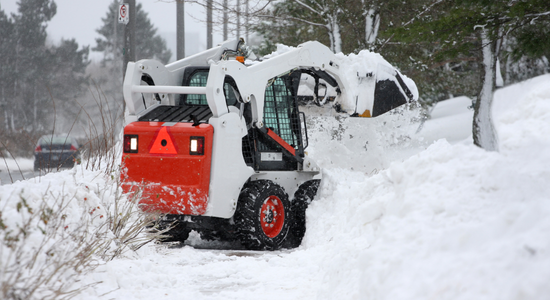
The owner typically hires the contractor to ensure a high standard of safety for all visitors. They then bill the cost back to the tenants. This ensures the property remains accessible and professional.
This matters because slip and fall accidents are the most common reason for liability claims against owners.
Even if you assign the duty to a tenant, you might still be named in a lawsuit. If a delivery person slips on an icy step and gets hurt, they will likely sue both the tenant and the owner.
The courts look for "negligence." They want to know if the owner took reasonable steps to prevent the accident. If you relied on a tenant who you knew was unreliable, you could be found negligent.
You cannot fully outsource your legal duty of care just by signing a paper. This is why smart business owners review their total maintenance budget, weighing these costs against the price of comprehensive insurance and professional risk mitigation.
Moving away from the usage of in-house staff or relying on tenants for snow clearing is a smart move for risk management. Hiring a professional contractor offers specific benefits that protect your investment.
So, do landlords have to provide snow removal? While the laws vary by province, the ultimate safety of the property often falls back on the owner. Relying on tenants or verbal agreements is a risk that can lead to costly legal battles.
No matter which province you operate in, professional help is key. For those in the Lower Mainland, BC, DIY isn't worth the risk. Ensure your tenants are happy and your property is safe this winter.
Get in touch with us for your free snow removal quote so you can rest easy knowing that the job is done right.